Hebrews Study Guide: An Overview
Delve into a comprehensive exploration of Hebrews, examining its rich theological depths and practical implications for faith․ This guide navigates the book’s unique presentation of Christ’s supremacy and the new covenant, offering insightful commentary and resources for deeper understanding․
The Epistle to the Hebrews stands apart within the New Testament, functioning as a bridge between the Old and New Covenants․ Unlike other Pauline epistles, it lacks a direct authorial claim from Paul, yet profoundly demonstrates fulfillment of Old Testament prophecies in Jesus Christ․ This unique characteristic makes it a classical treatment of how the Old Testament anticipates and finds its completion in the New․
Hebrews isn’t simply a recounting of historical events; it’s a persuasive argument for the superiority of Christ and His new covenant․ It meticulously compares and contrasts the Levitical priesthood and sacrificial system with the priesthood of Melchizedek and the ultimate sacrifice of Jesus․ The book serves as a “litmus test” for readers, resonating deeply with those who appreciate its typological approach and detailed examination of scriptural connections․
Understanding Hebrews requires recognizing its purpose: to encourage believers facing persecution and potential apostasy, reaffirming the finality and perfection found in Christ alone․
Authorship and Date
Determining the author of Hebrews remains a longstanding debate among biblical scholars․ While traditionally attributed to Paul, the epistle lacks his usual introductory greeting and stylistic markers․ Prominent candidates include Barnabas, Apollos, Priscilla, and Luke, yet definitive proof remains elusive․ Internal evidence suggests a familiarity with the Septuagint and a sophisticated understanding of Jewish sacrificial practices․
Dating Hebrews is equally challenging, largely due to the uncertain authorship․ Most scholars place its composition between AD 65 and 90, potentially before the destruction of the Second Temple in AD 70․ This timeframe aligns with the book’s concern for the continuing validity of the sacrificial system and the warnings against reverting to Old Covenant practices;
The lack of explicit external references to Hebrews before the late 2nd century further complicates the dating process, leaving room for ongoing scholarly discussion and refinement of proposed timelines․
Audience and Purpose
The intended audience of Hebrews appears to be Jewish Christians facing persecution and the temptation to revert to their former religious practices․ These believers were likely experiencing social ostracism and questioning the fulfillment of Old Testament promises in Christ․ The author addresses them as those “who have come to share in Christ,” yet still require encouragement to persevere in their faith․
The primary purpose of Hebrews is to demonstrate the absolute superiority of Jesus Christ over all aspects of the Old Covenant – angels, prophets, priests, and the sacrificial system․ By highlighting Christ’s unique priesthood, based on the order of Melchizedek, the author establishes a “new and better covenant” ratified by a final and perfect sacrifice․
Ultimately, Hebrews aims to strengthen faith, prevent apostasy, and inspire unwavering confidence in Christ as the ultimate revelation of God․

Key Themes in Hebrews
Central to Hebrews are themes of Christ’s unparalleled supremacy, the transformative power of the new covenant, and the critical importance of enduring faith amidst trials․
The Superiority of Christ
A foundational element within the book of Hebrews is the consistent demonstration of Christ’s absolute superiority․ This isn’t merely a statement of preference, but a carefully constructed argument establishing Jesus as exceeding all previous revelations and systems․ The author meticulously contrasts Christ with figures from the Old Testament – angels, Moses, Aaron, and the Levitical priesthood – to highlight His unmatched glory and authority․
Hebrews powerfully illustrates that Christ is superior to angels, being designated as “Son” and worshipped as God․ Unlike angels who serve, Christ is served․ Furthermore, He surpasses the Levitical priesthood, which was imperfect and temporary, by establishing a priesthood that is eternal, holy, and without flaw․ This new priesthood, modeled after Melchizedek, transcends the limitations of earthly lineage and offers a perfect and final sacrifice․
Understanding this supremacy is crucial, as it underscores the completeness and finality of God’s provision through Jesus․ It’s a call to unwavering faith and a rejection of reverting to outdated or inadequate systems․
Christ’s Superiority to Angels
The opening chapters of Hebrews meticulously establish Christ’s preeminence over angelic beings, a significant claim within the context of its original audience․ Angels held a revered position in Jewish thought, often acting as intermediaries between God and humanity․ However, Hebrews systematically dismantles any notion of angelic superiority, presenting Jesus as infinitely higher in status and authority․
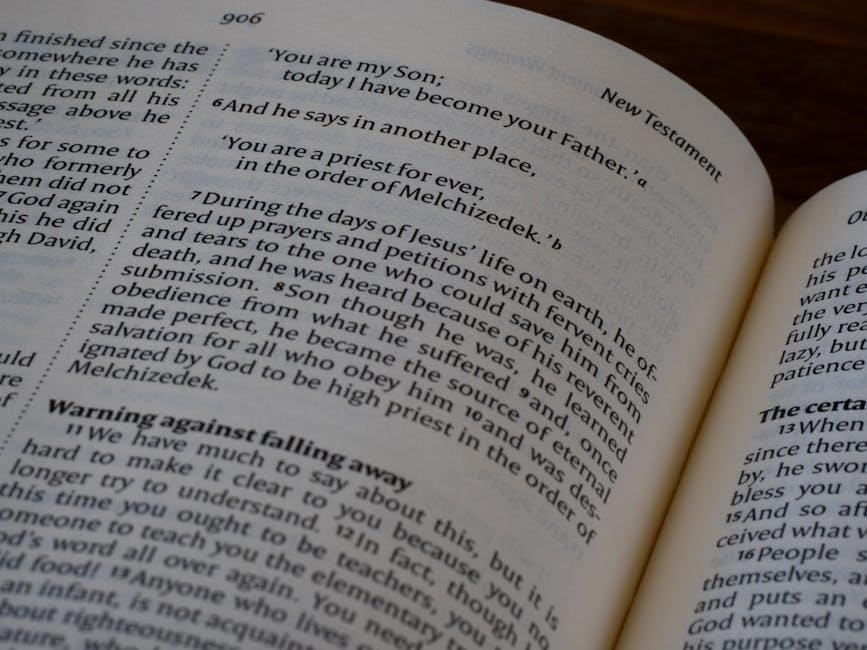
This superiority is demonstrated through several key arguments․ Firstly, Scripture explicitly declares Jesus as “Son,” a title never applied to angels․ Secondly, angels are commanded to worship Him, acknowledging His divine nature․ The author cites Psalm 2:7, “You are my Son; today I have begotten you,” solidifying Jesus’ unique relationship with the Father․
Furthermore, angels are servants, while Christ is the sovereign Lord․ This distinction is vital, emphasizing that access to God is now directly through Jesus, not through angelic intermediaries․ Recognizing this truth is fundamental to grasping the new covenant’s accessibility․
The New Covenant
Central to the book of Hebrews is the concept of the New Covenant, established through Jesus Christ, superseding the Old Covenant mediated by Moses․ This isn’t a mere modification but a complete replacement, offering a better, more effective means of reconciliation with God․ The Old Covenant, with its intricate system of sacrifices and laws, proved inadequate in achieving lasting atonement for sin․
Hebrews highlights that the Old Covenant was characterized by earthly ordinances and temporary provisions․ The New Covenant, however, is founded on better promises – promises of forgiveness, inward transformation, and a direct relationship with God through Jesus; Jeremiah 31:31-34 is frequently cited, foretelling a covenant written on the hearts of believers, not merely on stone tablets․
This inward transformation signifies a shift from external obedience to internal devotion, empowered by the Holy Spirit․ The New Covenant offers true and lasting peace with God, a peace unattainable under the Old Covenant’s limitations․
Contrast with the Old Covenant
Hebrews meticulously contrasts the New Covenant with the Old, demonstrating the latter’s inherent limitations and temporary nature․ The Old Covenant, centered around the Levitical priesthood and animal sacrifices, offered only a shadow of the good things to come, unable to truly perfect those who drew near to God․ These sacrifices were repeated endlessly, signifying an ongoing need for atonement that was never fully satisfied․
Conversely, the New Covenant, established through Jesus’ singular, final sacrifice, provides complete and permanent atonement․ Jesus, as the High Priest according to the order of Melchizedek, transcends the Levitical priesthood, offering a superior and enduring mediation․ The Old Covenant focused on external rituals; the New Covenant emphasizes internal transformation and a direct relationship with God․
Furthermore, the Old Covenant was associated with earthly promises and a physical sanctuary, while the New Covenant points to heavenly realities and a spiritual temple – the believers themselves․
Warning Against Apostasy

A significant portion of Hebrews delivers stern warnings against apostasy – the deliberate abandonment of the Christian faith․ The author emphasizes the severe consequences of turning away from Christ after having received the knowledge of truth, highlighting the impossibility of renewing such individuals to repentance․ This isn’t a warning against occasional struggles with doubt, but a caution against a complete rejection of the gospel․
These warnings are illustrated through Old Testament examples, such as Israel’s rebellion in the wilderness, demonstrating God’s judgment upon those who refused to enter His rest․ The author urges believers to diligently examine themselves, ensuring their faith is genuine and persevering․
Falling away isn’t merely intellectual dissent; it’s a willful rejection of God’s grace, leading to a fearful expectation of judgment․ The book stresses the importance of maintaining faith and mutual encouragement to avoid drifting from the truth․
The Danger of Falling Away
The author of Hebrews paints a stark picture of the peril awaiting those who deliberately renounce their faith․ “Falling away” isn’t presented as a casual lapse, but a conscious, willful rejection of Christ and the salvation offered through Him․ This act isn’t simply regrettable; it’s portrayed as tragically irreversible, with no possibility of restoration through repeated sacrifices․
The consequences are severe, described as trampling the Son of God underfoot and profaning the blood of the covenant․ Such a choice demonstrates a profound disrespect for God’s grace and a rejection of the ultimate sacrifice․ The warnings aren’t intended to instill fear, but to motivate genuine self-examination and steadfast perseverance․
It’s a call to hold fast to the confession of hope, recognizing the immense privilege and responsibility of knowing Christ․

Detailed Examination of Key Chapters
Explore pivotal passages like Hebrews 7, 8-9, and 10, dissecting Melchizedek’s priesthood, the tabernacle’s symbolism, and the finality of Christ’s sacrifice for profound insight․
Hebrews 7: Priesthood of Melchizedek
This chapter introduces Melchizedek, a mysterious figure appearing briefly in Genesis, yet holding immense significance in Hebrews’ argument for Christ’s superior priesthood․ Unlike the Levitical priests descended from Aaron, Melchizedek had no genealogical record of his beginning or end of life, symbolizing eternity․
He was both king and priest – a unique combination not found in Israelite priesthood – and he blessed Abraham, receiving tithes from him․ This demonstrates Melchizedek’s greater status, as the lesser is blessed by the greater․ The Levitical priesthood received tithes from the people, but Christ, through Melchizedek’s order, receives tithes even from Abraham, signifying his preeminence․

Hebrews argues that because Christ comes from the tribe of Judah, not Levi, He couldn’t be a priest according to the Levitical order․ Therefore, He’s a priest in the order of Melchizedek, a priesthood that doesn’t change with generations and is perfected forever, offering a better hope and a more lasting covenant․
Hebrews 8-9: The Tabernacle and Sacrifices
These chapters meticulously contrast the Old Covenant’s tabernacle and sacrificial system with the New Covenant established through Christ․ Hebrews emphasizes that the earthly tabernacle was a copy and shadow of the heavenly one, designed by God Himself․ The Old Testament sacrifices, though divinely ordained, were imperfect and unable to truly cleanse conscience․

They were repeated annually, indicating an ongoing need for atonement․ However, Christ’s sacrifice is a single, definitive offering, perfected once for all time, entering the heavenly places to appear before God on our behalf․ The author details the meticulous regulations surrounding the tabernacle, highlighting the separation between the Holy Place and the Most Holy Place, accessible only to the high priest once a year․
This illustrates the limitations of the Old Covenant and foreshadows Christ’s ultimate access to God’s presence, offering a better, more complete redemption․
Hebrews 10: The Final Sacrifice
Chapter 10 powerfully proclaims the finality and perfection of Christ’s sacrifice, definitively ending the need for repeated Old Testament offerings․ The author argues that the law, with its sacrifices, could never truly make worshippers perfect, as it only offered a shadow of good things to come․ Christ’s single offering of Himself, however, completely and permanently atones for sins․
This sacrifice isn’t merely a replacement, but a fulfillment, establishing a new covenant based on better promises․ Hebrews emphasizes that through one offering, Christ has perfected forever those who are being sanctified․ Furthermore, it warns against deliberately continuing in sin after receiving knowledge of the truth, as there remains no further sacrifice for forgiveness;
This chapter underscores the immense privilege and responsibility of believers, urging them to draw near to God with a sincere heart and unwavering faith․

Practical Application for Believers
Embrace unwavering faith and steadfast perseverance, drawing strength from Christ’s ultimate sacrifice; live by faith, resisting apostasy and embracing the new covenant’s promises․
Faith and Perseverance
The book of Hebrews powerfully emphasizes the necessity of faith and perseverance for believers․ It’s not merely about initial belief, but a sustained commitment to Christ, even amidst trials and temptations․ Hebrews acts as a “litmus test,” revealing the depth of one’s faith through endurance․
Consider the warnings against falling away – a stark reminder of the danger of abandoning the faith․ True believers demonstrate their faith through obedience and a steadfast gaze upon Jesus, the author and finisher of our faith․ This perseverance isn’t self-generated; it’s empowered by God’s grace and sustained by the hope offered in the new covenant․
Hebrews encourages us to run with endurance the race set before us, looking unto Jesus․ It’s a call to actively participate in the life of faith, resisting provocation and relying entirely on God’s provision․ This ongoing commitment is evidence of a genuine transformation and a secure standing in Christ․
Living by Faith
Hebrews defines faith not as blind acceptance, but as confident assurance and conviction of things unseen – a tangible reality shaping daily life․ It’s demonstrated through obedience, exemplified by the Old Testament heroes whose lives pleased God․ These figures lived anticipating a future fulfillment, mirroring our own reliance on Christ’s finished work․
The author stresses that without faith, it’s impossible to please God․ Living by faith means trusting in God’s promises, even when circumstances appear bleak․ It’s a rejection of self-reliance and an embrace of complete dependence on His provision and grace․ This isn’t a passive waiting, but an active pursuit of righteousness․
Furthermore, Hebrews highlights that faith is the substance of things hoped for, the evidence of things not seen․ It transforms our perspective, enabling us to view trials as opportunities for growth and refinement, strengthening our relationship with God and solidifying our hope in eternity․

Resources for Further Study
Explore detailed commentaries, insightful online Bible studies, and hermeneutical resources to deepen your understanding of Hebrews and its enduring message of faith․
Commentaries on Hebrews
Numerous commentaries offer valuable perspectives on the Book of Hebrews, aiding in a more thorough understanding of its complex arguments and theological nuances․ Dr․ Bob Utley’s written commentary, available in a Tagalog version, provides a detailed verse-by-verse exploration, focusing on biblical interpretation and hermeneutics․
For those seeking a broader range of viewpoints, several other resources are available․ Commentaries often dissect the book’s presentation of Christ’s fulfillment of Old Testament types and shadows, highlighting the superiority of the new covenant․ They delve into the intricacies of the priestly system, particularly the Melchizedekian priesthood discussed in Hebrews 7, and the significance of the tabernacle and sacrifices detailed in chapters 8 and 9․
These resources assist in navigating challenging passages and grasping the author’s intent, ultimately enriching your study and application of Hebrews’ timeless truths․ Exploring different commentaries can reveal layers of meaning and deepen your appreciation for this pivotal New Testament book․
Online Bible Studies
Engage with the Book of Hebrews through a wealth of online Bible studies, offering interactive learning experiences and community support․ Many platforms provide verse-by-verse analyses, insightful commentary, and discussion forums to foster deeper understanding․ These studies often explore the book’s central themes, such as Christ’s supremacy, the new covenant, and the dangers of apostasy․
Several websites offer free resources, including video lectures, downloadable study guides, and interactive quizzes․ These digital tools cater to various learning styles and allow you to study at your own pace․ Online studies frequently address challenging passages, like those concerning temptation and provocation found in Hebrews 3:7-13, providing clarity and context․
Participating in online communities allows you to connect with fellow believers, share insights, and grow in your faith alongside others studying Hebrews․