Understanding Pipe Size Charts (PDF)
Pipe size charts, often available as PDFs, are essential tools for engineers, plumbers, and anyone involved in piping systems.
These charts, like the one from Tioga Pipe, detail crucial dimensions and weights for various pipe sizes and schedules.
Accessing these resources, particularly those from manufacturers or industry standards organizations, ensures accurate project planning and material selection.
Pipe sizing is a fundamental aspect of any fluid transport system, dictating efficiency, cost, and safety. Utilizing a pipe size chart PDF, such as those provided by companies like Tioga Pipe, is the first step in ensuring a correctly designed system. These charts aren’t merely lists of numbers; they represent a standardized system for selecting the appropriate pipe diameter and wall thickness for a given application.
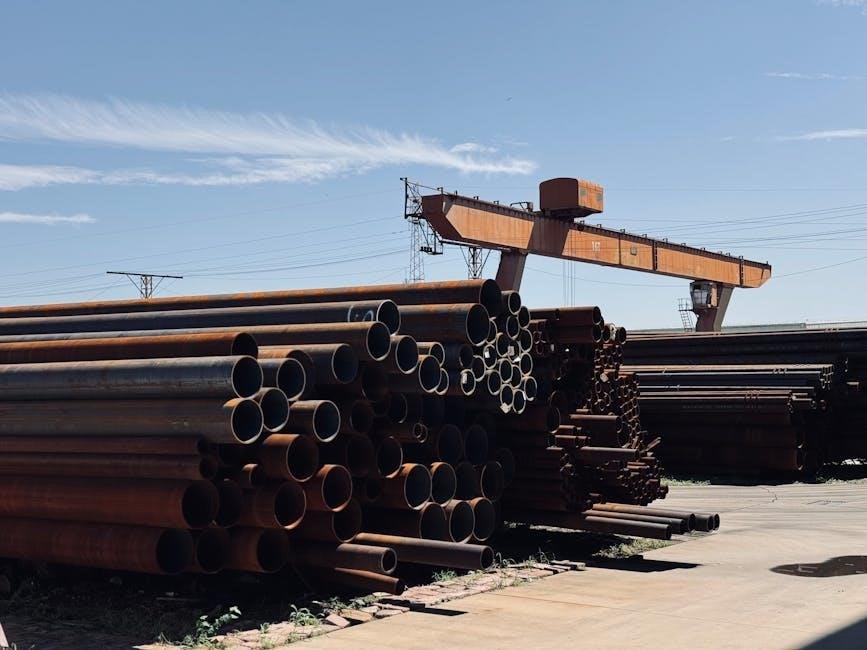
Proper sizing considers factors like flow rate, fluid pressure, material compatibility, and regulatory requirements. Incorrect sizing can lead to issues like excessive pressure drop, erosion, or even catastrophic failure. The charts consolidate critical data – nominal pipe size, outside diameter, schedule number, and weight – into a readily accessible format. Understanding these parameters, as detailed in these PDFs, is crucial for effective system design and implementation, ultimately saving time and resources.
Regional centers, like those of Tioga Pipe in Philadelphia, Houston, and Chattanooga, often provide these resources to support their customers’ projects.

Key Components of a Pipe Size Chart
Essential elements within a pipe size chart PDF include outside diameter (OD), schedule number, wall thickness, and weight per unit length, aiding precise selection.
Nominal Pipe Size (NPS)
Nominal Pipe Size (NPS) represents a standardized designation for pipe diameter, but it doesn’t always directly correlate to the actual inside or outside diameter. It’s a legacy system originating from when pipe dimensions were based on approximate internal diameters.
Charts, like those from Tioga Pipe, list NPS values alongside corresponding OD and wall thicknesses. Understanding NPS is crucial because it dictates the compatibility of fittings and other components within a piping system. For example, a 2-inch NPS pipe will always have a specific OD, regardless of its schedule.
The NPS system simplifies ordering and ensures interchangeability, even though the actual dimensions vary with schedule. It’s a foundational concept when interpreting pipe size charts and selecting the correct materials for any application.
Outside Diameter (OD)
The Outside Diameter (OD) of a pipe is a critical dimension found within pipe size charts, like the one offered by Tioga Pipe. Unlike Nominal Pipe Size (NPS), the OD is a precise measurement, defining the pipe’s external width. This value is essential for ensuring proper fit with flanges, valves, and other connecting components.
Pipe charts clearly display OD in both millimeters (mm) and inches, allowing for versatile application across different measurement systems. It’s important to note that while NPS remains constant for a given size, the OD changes based on the pipe’s schedule (wall thickness).
Accurate OD determination is vital for preventing leaks and maintaining system integrity. Always refer to a reliable chart when specifying or selecting piping materials.
Schedule Number & Wall Thickness
Pipe schedule numbers, detailed in charts like those from Tioga Pipe, directly correlate to a pipe’s wall thickness and, consequently, its pressure-handling capability. Higher schedule numbers indicate thicker walls. These charts present both the schedule number (e.g., 40, 80) and the corresponding wall thickness, typically in millimeters (mm) and inches.
Understanding this relationship is crucial for selecting the appropriate pipe for a specific application. A thicker wall provides greater strength to withstand higher internal pressures and external loads. The schedule impacts the pipe’s weight and cost, so careful consideration is necessary.
Charts clearly outline these specifications, enabling informed decisions based on project requirements and safety standards.
Pipe Weight per Meter/Foot
Pipe size charts, such as the PDF provided by Tioga Pipe, consistently include weight data, expressed as pounds per meter or pounds per foot. This information is vital for accurate material estimation, transportation planning, and structural support calculations.
Weight varies significantly based on pipe size, schedule number (wall thickness), and material type; Charts allow quick determination of the total weight of piping required for a project, influencing logistical considerations and cost projections.
Accurate weight calculations are also essential for ensuring proper support systems are designed to handle the load, maintaining safety and preventing potential failures. These charts streamline this process, offering a readily available reference point.
Types of Pipe Covered in Charts
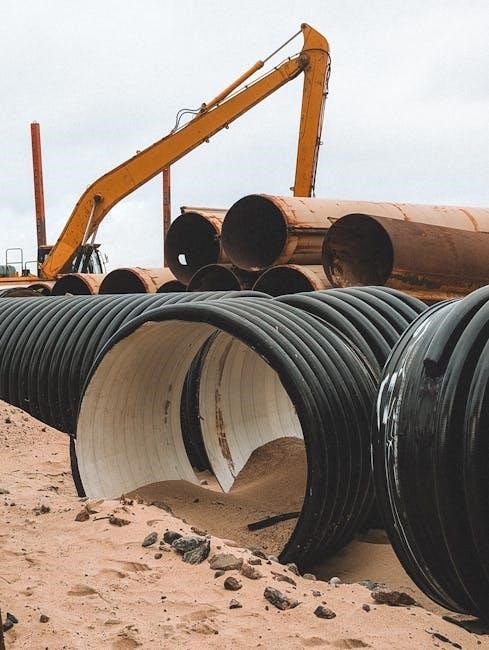
Pipe size charts, like those from Tioga Pipe, commonly categorize data by material – carbon steel, stainless steel, and PVC – each with unique properties.
Carbon Steel Pipe
Carbon steel pipe is extensively covered in pipe size charts due to its widespread use in numerous applications, including plumbing and industrial piping systems. These charts meticulously detail the Outside Diameter (OD), Schedule Number, and corresponding wall thickness for various sizes, typically measured in inches and millimeters.
Weight data, expressed as pounds per meter or foot, is also a critical component, aiding in accurate material estimation and transportation planning. Charts often differentiate between seamless and welded carbon steel pipes, as manufacturing methods impact dimensions and weight.
Tioga Pipe’s chart exemplifies this, providing a comprehensive overview of dimensions for different schedules like 40 and 80. Understanding these specifications is vital for ensuring compatibility within a piping system and adhering to relevant industry standards.
Stainless Steel Pipe
Stainless steel pipe, renowned for its corrosion resistance, also features prominently in pipe size charts, though with nuances compared to carbon steel. Charts detail OD, Schedule, and wall thickness, crucial for applications in demanding environments like chemical processing and food production.
Weight per meter/foot is similarly provided, aiding in project calculations. However, stainless steel’s higher density results in greater weight compared to carbon steel for equivalent sizes and schedules. Pipe size charts often categorize stainless steel by grade (e.g., 304, 316), each with slightly varying dimensions.
Tioga Pipe’s resources, and others from industry organizations, are essential for accessing this detailed information. Accurate interpretation of these charts ensures proper selection and integration of stainless steel piping components.
PVC Pipe Sizing Considerations
PVC pipe sizing differs significantly from metallic piping, and dedicated charts are vital. Unlike steel, PVC is categorized by Schedule (40, 80) which dictates wall thickness and pressure rating, not necessarily physical dimensions. Charts detail Nominal Pipe Size (NPS), but Outside Diameter (OD) remains consistent within a schedule.
Weight data for PVC is less critical than for steel, due to its lighter density. However, charts still provide weight per foot/meter for calculating material quantities. Pressure ratings are a key consideration, influencing schedule selection based on application demands.
Reliable PVC pipe size charts, often found on manufacturer websites like Tioga Pipe, are crucial for accurate system design and ensuring compliance with plumbing codes.

Decoding ASME Pipe Schedules
ASME pipe schedules, detailed in charts like those from Tioga Pipe, define wall thickness and pressure capacity.
Understanding these schedules – 40, 80, and others – is vital for safe, efficient piping systems.

Schedule 40 Pipe
Schedule 40 pipe represents a widely utilized standard within piping systems, balancing cost-effectiveness with suitable pressure handling capabilities. Pipe size charts, such as the PDF provided by Tioga Pipe, clearly outline the dimensions and weights associated with Schedule 40 pipes across various Nominal Pipe Sizes (NPS).
These charts detail the Outside Diameter (OD), wall thickness, and weight per meter or foot, enabling precise material calculations for projects. Schedule 40 is commonly employed in applications where moderate pressures and temperatures are present, making it a versatile choice for many industrial and commercial installations.
Its popularity stems from its balance between strength and affordability, offering a reliable solution without excessive cost. When referencing a pipe size chart, always confirm the material type (e.g., carbon steel) as dimensions can vary.
Schedule 80 Pipe
Schedule 80 pipe signifies a heavier wall thickness compared to Schedule 40, providing enhanced strength and pressure-bearing capacity. Examining a pipe size chart PDF, like that offered by Tioga Pipe, reveals the precise dimensional differences between these schedules for each Nominal Pipe Size (NPS).
This increased wall thickness translates to a higher weight per meter/foot, a detail readily available on these charts. Schedule 80 is frequently selected for applications demanding greater safety margins, higher operating pressures, or resistance to external loads.
Commonly found in critical industrial processes and high-pressure systems, Schedule 80 offers a robust solution. Always verify the material specification alongside the schedule when consulting a chart, as weight and dimensions are material-dependent.
Other Common Schedules (10, 20, 160)
Beyond Schedule 40 and 80, pipe size chart PDFs, such as those from Tioga Pipe, detail less frequently used, yet important, schedules like 10, 20, and 160. Schedule 10 represents a thinner wall than Schedule 40, suitable for lower-pressure applications where cost optimization is key.
Schedule 20 offers a slight improvement over 10, still prioritizing economy. Conversely, Schedule 160 provides an exceptionally thick wall, designed for extremely high-pressure and demanding environments.
These charts clearly illustrate the corresponding outside diameters (OD), wall thicknesses, and weights per unit length for each schedule and NPS. Selecting the appropriate schedule requires careful consideration of operating conditions and safety factors, all informed by the data within these PDFs.
Using a Pipe Size Chart PDF
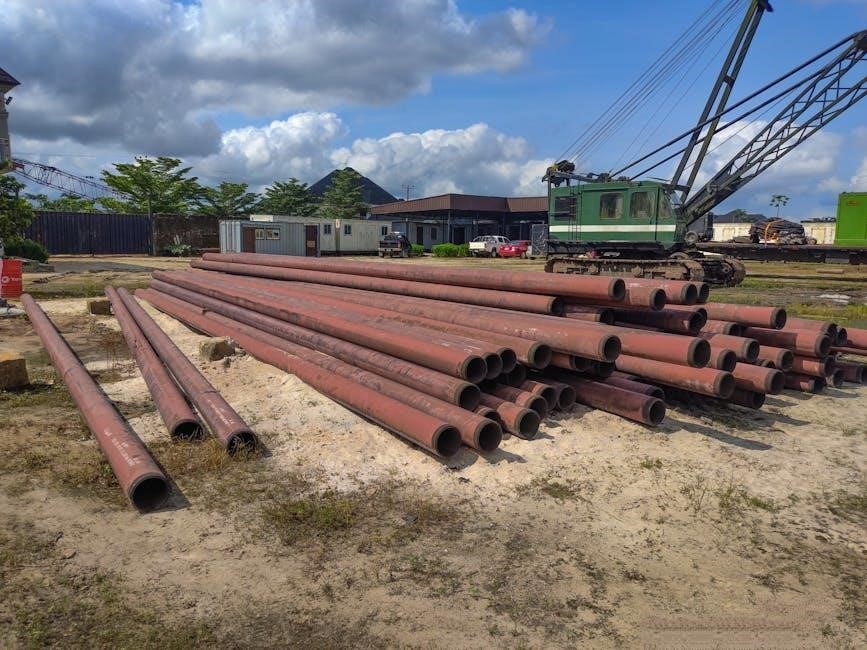
PDF charts from sources like Tioga Pipe enable quick location of dimensions and weight data for accurate pipe selection and project calculations.
Locating Specific Pipe Dimensions
Utilizing a pipe size chart PDF, such as the one provided by Tioga Pipe, begins with identifying the desired Nominal Pipe Size (NPS). Charts are typically organized by NPS, allowing for easy navigation to the relevant section.
Once the NPS is located, you can then pinpoint the specific Outside Diameter (OD) and wall thickness based on the chosen Schedule number (e.g., Schedule 40, Schedule 80). The chart clearly displays these values in both metric (millimeters) and imperial (inches) units.
Carefully cross-reference the NPS, Schedule, and material type (e.g., carbon steel, stainless steel) to ensure you are viewing the correct dimensions. The PDF format allows for zooming and precise measurement reading, crucial for accurate project planning and component compatibility.
Interpreting Weight Data
Pipe size chart PDFs, like the Tioga Pipe document, include critical weight data expressed as pounds per meter or pounds per foot. This information is vital for calculating the total weight of piping systems, influencing transportation costs and structural support requirements.
The weight listed corresponds to a specific pipe size, schedule, and material; Understanding this correlation is crucial; a heavier schedule (e.g., 80) will result in a higher weight per unit length compared to a lighter schedule (e.g., 40) of the same NPS.
Accurate weight estimation is essential for safe handling, installation, and ensuring the piping system adheres to relevant safety standards. Always verify the units (lbs/meter vs. lbs/foot) before performing calculations.

Where to Find Reliable Pipe Size Chart PDFs
Reliable PDFs are readily available from manufacturer websites, such as Tioga Pipe, and established industry standards organizations. These sources guarantee accuracy.
Manufacturer Websites (e.g., Tioga Pipe)
Manufacturer websites represent a primary and highly dependable source for obtaining accurate pipe size chart PDFs. Companies like Tioga Pipe directly provide detailed documentation outlining the specifications of their products.
These charts, often downloadable in PDF format, contain critical information including nominal pipe size, outside diameter, schedule number, wall thickness, and pipe weight per meter or foot. Tioga Pipe’s resource, for example, lists dimensions and weights for seamless pipes.
Directly sourcing from manufacturers ensures the data aligns precisely with their manufactured products, minimizing potential errors in project calculations and material ordering. Furthermore, these websites frequently offer updated charts reflecting any changes in product specifications or industry standards. Contact information, such as sales emails (sales@tiogapipe.com), is also readily available for further assistance.
Industry Standards Organizations
Reliable pipe size chart PDFs are also frequently published by industry standards organizations. These entities establish and maintain benchmarks for pipe dimensions, material specifications, and safety regulations.
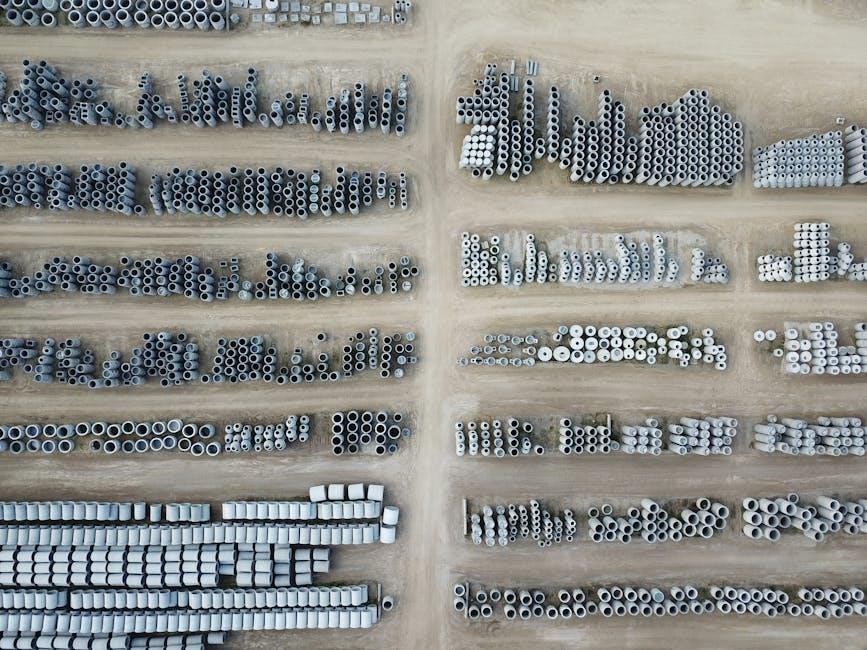
While the provided text doesn’t explicitly name specific organizations, these sources offer impartial and comprehensive charts based on established industry consensus. These charts often detail various pipe schedules (like 40, 80, and others) and their corresponding properties.
Consulting these resources ensures adherence to recognized standards, crucial for project compliance and safety. Accessing these PDFs provides a consistent and verifiable reference point for engineers and professionals. Manufacturers, like Tioga Pipe, often align their product specifications with these industry standards, making cross-referencing easier and more accurate.

Applications of Pipe Size Charts
Pipe size charts (PDFs) are vital for accurate material selection in plumbing, industrial piping, and the oil and gas industry, ensuring efficient system design.
Plumbing Systems
In residential and commercial plumbing, pipe size charts are indispensable for determining the correct diameter and schedule of pipes needed for water supply and drainage systems. PDF charts, like those offered by Tioga Pipe, provide critical data for calculating flow rates, minimizing pressure loss, and ensuring compliance with local plumbing codes.
Proper pipe sizing prevents issues like water hammer, insufficient water pressure at fixtures, and noisy drain lines. Charts detail the outside diameter (OD), wall thickness, and weight per meter/foot, allowing plumbers to accurately estimate material costs and labor requirements. Selecting the appropriate schedule (e.g., Schedule 40) based on pressure requirements is crucial for a safe and reliable plumbing installation.
Furthermore, understanding the nominal pipe size (NPS) helps in matching fittings and components, creating a seamless and efficient plumbing network. Utilizing these charts streamlines the design and installation process, ultimately contributing to a durable and functional plumbing system.
Industrial Piping
Industrial piping systems, handling diverse fluids at varying temperatures and pressures, demand precise pipe selection guided by comprehensive pipe size charts. PDF versions, such as those from manufacturers like Tioga Pipe, are vital for engineers designing complex networks for chemical plants, power generation, and manufacturing facilities.
These charts facilitate accurate calculations of flow velocity, pressure drop, and pipe stress, ensuring system integrity and operational efficiency. Data on pipe weight per meter/foot is crucial for structural support design and transportation logistics. Selecting the correct schedule (e.g., Schedule 80 or higher) is paramount for withstanding harsh operating conditions.
Moreover, charts detailing carbon steel and stainless steel pipe dimensions enable engineers to choose materials compatible with the conveyed fluids, preventing corrosion and ensuring long-term reliability. Accurate interpretation of these charts minimizes downtime and maximizes plant safety.
Oil and Gas Industry
The oil and gas industry relies heavily on pipe size charts, often accessed as PDF documents, for the safe and efficient transport of crude oil, natural gas, and refined products. These charts, like those offered by Tioga Pipe, are critical for pipeline design, construction, and maintenance, adhering to stringent industry regulations.
Accurate pipe sizing is paramount for managing high pressures and temperatures encountered in extraction, processing, and distribution. Charts detailing nominal pipe size (NPS), outside diameter (OD), and wall thickness are essential for calculating hydrostatic test pressures and ensuring pipeline integrity.
Weight data, readily available in these charts, aids in logistical planning and installation. Selecting appropriate pipe schedules, like Schedule 40 or 80, is vital for withstanding corrosive environments and preventing failures, safeguarding both the environment and operational continuity.